pic in woods Austria

pic in woods Austria

Tuesday, July 21, 2015

I left there, but I'm not here yet.


"To leave one's country to go
and live in another country
in inferior conditions,
that is, without a safety net
and without recourse of return
to one's native land,
this seems to me to be the last great
human adventure.

I have to explain that people don't eat
the same food,
they don't dress
in the same manner,
they don't dance to the same rhythms,
they don't have the same smells
or the same accents,
and they certainly don't dream
the same way,
but it's up to me to adapt.

I have to explain it all in a language
that is not the one my mother speaks.
That's what traveling means.

[...]

I left there,
but I'm not
here yet.
Be patient, young man, it's only been a year.

I can't tell you
exactly when this city
ceased being a foreign city
for me.
Perhaps when I stopped looking at it."

Dany Laferrière, A Drifting Year (original French version: Chronique de la dérive douce)

I saved this excerpt as a draft in Blogger exactly 1 year and 1 day ago. About two weeks before we arrived in Montreal. While I was packing up my office in our house in Germany, taking notes on this novel for my dissertation.

Laferrière's writing is beautiful and painful, and I knew it would describe my experience in the year to come. I haven't opened Blogger in a year. But I knew this excerpt was here, waiting.

The first month in Montreal, I truly didn't have time to think much less blog or reflect. Each evening was spent apartment hunting, trying to figure out where to buy groceries, and clothes, and school supplies. And find a school for my son at all.

In the fall, I thought about blogging a little. But could only think of all the comparisons I would make between Montreal and Konstanz, Quebec and Germany, North American and European life and cultural norms. How some readers would laugh and nod in agreement. And others would be offended and think, "go back where you came from!"

Then the winter rolled in and with it all kinds of struggles. Finding our feet in my old-new land has been challenging. I had no desire to process it all on the internet. We went to far-away trusted friends and mentors for counsel. We changed our minds about some things. We made some mistakes. We learned. We clung to God alone. Not even close friends or church to cling to now.

We bought our first home, a tiny urban condo smaller than the last 2 homes we've had. Just a bit bigger than the 1-bedroom half-basement that housed us for the first 5 years of our marriage. I've plugged away at my dissertation in the midst of it all, and the end is in sight. My son learned to ride a bike, and understand French, and sing in Spanish. My daughter went from a baby to a fiercely independent child, diaper-free and talking a blue streak. We've made a surprisingly large network of contacts in different neighbourhoods, churches, schools. We've made some decisions, coming back to our true selves and defining our core values.

These last few months, I've realized I miss writing, and am starting to feel free enough to do it again in this space.

I write this on the eve of our first trip back "home" to that beautiful lake and city that nurtured us for 9 years. Where we got engaged, and grew up, and learned to open up in community. City of our children's births.

I guess you could say our feet have found the ground now in Montreal.
When we get back, they can start to grow roots.

Be patient, it's only been a year.


Sunday, July 20, 2014

They're just things. {The end of decluttering}

With our inter-continental move coming up in two weeks (what?!) we finally had our big Flohmarkt (yard sale) on the weekend. We had an amazing group of friends help us out with setting up and keeping me sane while my husband had fun haggling over prices with neighbours and strangers. (Who has fun doing that? An introvert's hell. I cracked under the pressure of the two older ladies who arrived early while my husband was on a coffee run.) Two of my dear sisters-in-law came down for the weekend and gave the kids the time of their lives, caring for them so well, taking them out swimming all day and singing them a harmonized lullaby.

As we are only moving across the pond with 4 suitcases and shipping a few boxes, we have sold most of our furniture and belongings over the past few months. On Saturday, several people asked me if I felt sad seeing our stuff walking off in the hands of others.

I said, "No. It's a relief."

Partly because no appliances could be brought along, needing an adapter and a transformer, plus the cost of shipping made that an easy decision. Partly because much of it was stuff we no longer used, books we had no time to re-read, ill-fitting clothes, furniture we can't bring on a plane and is not worth its weight to ship. Our tastes have changed and we look forward to decorating a new home slowly, hopefully choosing very carefully and hunting for good deals rather than taking everything we were offered for free (as we did as newlyweds) or buying whatever was cheapest (as we did as newlywed students). What we had been planning and preparing for for months was finally reality, and it is good to see progress.


I've been writing a lot around here (and here and here and here) about decluttering over the past few months. I've found it freeing. I've found it shocking (to see how much we really have accumulated that we don't often use or like). So many times when we've sold something my husband and I both agree "wow, it looks better now without that." Our almost-4-year-old son has dealt remarkably well with seeing things go, taking it in stride when we reassure him that his favourite toys will come along, and explaining that that lamp doesn't fit on the plane.

I did have a bout of sadness six months ago about leaving behind our couch, the one piece of furniture we longed for through years and carefully picked out only 2.5 years ago. I love it, it's comfortable, and it would've lasted til our children brought their boy/girlfriends home to meet us (how long my mom always told us our couches had to last when we were jumping on them). And we are taking some things with us -- I would be sad if our suitcases of current clothing and favourite books didn't arrive, quite at a loss if my boxes full of PhD research got lost, and utterly devastated if something happened to my children's baby books. There's nothing wrong with having a comfortable, inviting home where people feel welcomed, we hope to set up one of those in Montreal when we arrive. There's nothing wrong with enjoying the things we love and find beautiful and useful.

But the main reason I didn't feel sad when selling much of what we've owned is that they're just things. They are. Just stuff.

So many people have lost everything in fires, tornadoes, floods, war. Suddenly. They didn't have a year to carefully pare down their excess baggage like I've had. They didn't get to choose the best and most beloved toys for their children to keep to give them a sense of familiarity when all else around them changes.

Best friends.

What does make me tear up over these last few weeks is imagining how to help my son say goodbye to his best friend. I cry about leaving behind the beloved friend who is so kind to my children, that there will be no one in our new city who has known them from birth. That there will be German family parties and celebrations where our places will be missing. People matter. Eternal things matter.

I hope I'll never set my heart or hopes on my furniture, my technology, my trinkets, my status symbols, whether they be clothes that flatter or books that reflect my interests or decorative items that show I'm hip. I hope I can enjoy the gifts God gives, create a home that welcomes and offers comfort, but keep my heart truly at home in heaven, in eternal things. I hope I will be willing to give things I have to people who need them, without a wince. I hope I'll always trust the One who has provided thus far to provide again. I hope I'll always be willing to sell all I have to follow Him.

Friday, July 18, 2014

My Best Books for Kids: Life Changes

We love books at our house.

Our 22 month old can page through books on her own for upwards of half an hour. Of course we read several books every night before bed, but also in the morning before Kindergarten, in the afternoon, any time they ask really, I try to fit it in. When my son misbehaves I remind him that if he continues, he will lose a story before bed (a fate worse than death!) I am so thankful I was raised on books, my mom sitting on the yellow leopard-sot carpeting of our stairs, reading out loud to all three girls tucked in their beds in adjacent rooms. We all know reading helps kids to speak, read, and write better, to concentrate, to develop their imaginations, expand their vocabularies, and have quality time with parents. Is there anything better than having your kids snuggle up to you to dive into a book?!


We also use books to talk through life changes.

When our second child was born two years ago, I got two great books I'd recommend for introducing a new sibling to the family.


"My New Baby" by Rachel Fuller is our favourite -- our kids still love to look at it. The pages are large, very durable board, with vibrant images our kids love. I love it that these books focus on the positives of having a new sibling, and the practical realities of life with them. I would never read a book demonstrating bad behaviours towards the baby (which is common in books on this topic) unless my child was already displaying them. I certainly didn't want to put negative ideas into his head which he did not already have!

From the New Baby series we also got a book about everyday life with a sibling, "Look at Me"


Again our kids LOVE this book. They always point to the younger/older sibling doing certain activities and say their own names, identifying with these real-life situations.

Our favourite book for toilet learning is Dr. Sears' You can go to the potty


It has great, practical images, our kids love it, and includes extra advice and tips for parents for gentle potty learning. If you cloth diaper, breastfeed, and co-sleep like we do, you'll enjoy seeing those images of daily life reflected in the pages.

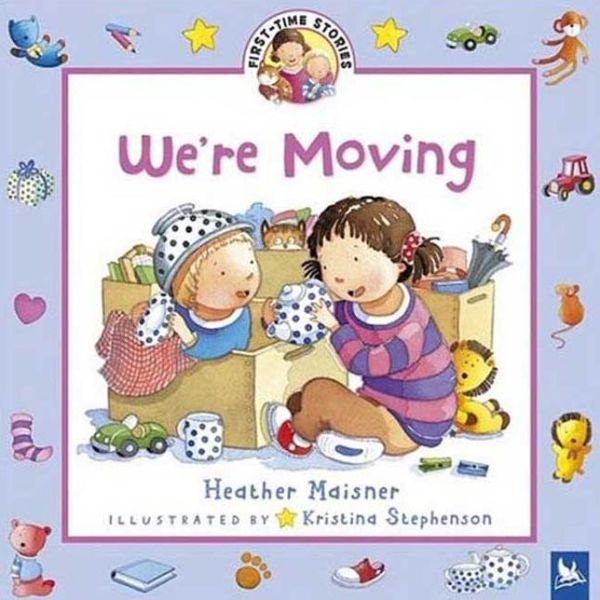
And for our big move across the pond in 2 weeks, I just remembered to look for some books to help our kids process their emotions about it. In the all the sorting, selling, and packing, we have drastically reduced their book collection, so they could really use a new read anyway (borrowing from the library and remembering to take them back on time is just too big of a hassle in our final month here). I can't believe I didn't think to do this sooner! I guess because I have been so focused on decluttering and minimizing our possessions to fit in 4 suitcases and a few boxes for the past 6 months. I am really looking forward for two books from this list to arrive soon.

We're Moving


In this season which brings so much change to us all, I want to intentionally help our kids process their emotions about leaving friends, language, house, routines -- all that is familiar. Not repressing or ignoring the sadness and loss, but holding fast together, getting through it til we flourish on the other side.

Monday, June 30, 2014

More Things I'll Miss about Germany

I started a little list of the whimsical things I'll miss about my adopted homeland (or should I say married homeland?) when we move to Canada this summer. These things begged to be added:

9. Tax included

Every time I have visited my family in Canada over the past decade I've had that moment, in a store or restaurant of, oh, yeah. This was more expensive than it says on the price tag. Ever since OAC calculus at the end of high school, I don't really *do* math. We all have our strengths. I say that's what fingers are there for. Seriously, the EU's inclusion of sales tax in the advertised price is one of the best things about everyday life in Europe. Picturesque architecture and biking everywhere is great, but tax included is right up there.

10. World Cup mania

Now I know Montreal and Toronto are great cities to experience the World Cup in, home to people from every nation overflowing from pubs onto sidewalks cheering for their country of origin. But there is something I love about the three World Cups I have experienced while living in Germany. The entire country united, cheering for "our eleven." Women, men, children, and grandparents discussing the finer points of soccer, saying "we're playing on Friday", taking ownership of the team. The doctor and her team of assistants greet me professionally, each one sporting a soccer jersey of various teams. (Do fights out in the break room?) Angela Merkel is much beloved for flying to the games in Brazil right now, sparing no expense to root on our team in person. "Public viewing" on big screens in every bar and beer garden, faces painted and jersey's donned, it is good fun to spend summer evenings outside in a friendly crowd.

Even if watching in our quiet village, walking the baby home to bed before the end of the game I know the score by the shouts rising from homes around the neighbourhood. The streets are totally empty during a game, you could hear a pin drop between goals as German nation is glued to the television.


11. Excellent health care

... with little waiting. We have a GP, pediatrician, gynecologist, midwife and other specialists for our family when needed. All take time for us, have a friendly/personal relationship to our family (our pediatrician even came to our house for a home visit 5 days after our home birth for a routine check-up, so I didn't have to go to his office). We do pay more for our health insurance monthly than Canadians do, but I think many there would love the availability of doctors, quick, excellent, and personal care we get in Germany.

12. Kinderbasare

I've gushed about these highly organized, parent-to-parent sales before. We got most of our kids clothes, books, and toys in good quality, second-hand, for only a few Euros. Deal-hunting is the mama's high.

13. The Autobahn

Though I am not big on driving or spending time in the car, by now even I appreciate the freedom of driving the speed you want to get where you need to go. Quick and efficient, those Germans. And German drivers who fastidiously all obey the rules, stay in the right lane and only pass on the left.

14. Wine & cheese for under 5 €

When we visit Canada, the prices of both wine and dairy products take our breath away. In the sick-to-your-stomach kind of way. We've enjoyed the great variety of nice, inexpensive wines and cheeses for a decade and will have to re-orient our diets once back across the pond. Not that we live off the stuff, but I am sure the quantity and variety of cheeses will reduce (not necessarily bad for my waistline).

15. Social expectations/norms

I actually will miss certain ones, I think. There are some unwritten rules (actually, I think they are written somewhere...Knigge?) about how one is to behave, shaking of hands (even with children), greetings, holding of knife and fork, waiting for one another to sit, wishing each other Guten Appetit before eating... This was a steep learning curve for a Canadian farm girl, but these social norms I love. North Americans kind of pride themselves on a mentality of every one do what you want as long as you don't hurt anyone else. I love that table manners, which are in some places a lost art, are still widely taught and expected of all. Sometimes it just helps to know what is expected.
I will not miss being scolded on the street by strangers if I jaywalk on a red light (I mostly broke this habit but did it absentmindedly the other day, with my 3 year old son holding me by the hand. Oh, The Look and frown that old lady gave me!)


I could go on and on about bike paths, the efficient train and bus networks that are rarely not on time. Minimalist design. Cobblestone streets in the old city. Der Grüner Punkt. Cheap cell phone plans. Modern, funky, well-maintained playgrounds with huge wooden pirate ships or giant cat tales for my son to climb on. The accessibility of vacationing in the south of France or Italy for average families.
But of course, what we'll miss most are the people. Germans are famous for not making friends quickly, and taking a longer time than most to use the word "friend" to describe someone they work with, or spend time with in any regular intervals. I've heard it said that once a German calls you friend, they're your friend for life.

May it be so.


Tuesday, June 17, 2014

The last great human adventure

"To leave one's country to go
and live in another country
in inferior conditions,
that is, without a safety net
and without recourse of return
to one's native land,
this seems to me to be last great human adventure."
Dany Laferrière, A Drifting Year


I write from a place of privilege.

Moving from one rich country to another, with education, passports, and family on both sides of the Atlantic makes our family a blessed and privileged kind of immigrant family. I don't know the want, terror, fears of millions of immigrants around the globe who get to a new country with no connections, no money, perhaps no education or no way to have their training acknowledged in the new land.

But still.

These past two days, as we have ticked off a few more big milestones and head into the last busy stretch of moving-packing-sorting, I feel the no safety net feelings.

I came this way a decade ago. And it was hard.

I return to my native land x 4. Blessed. No longer one, but "many."
I've got old friends and contacts in our new city, family an 8-10 hour drive away.

But still. In many ways, Canada is new to me again.

It is definitely new to my husband and children, and though we are excited, there are moments of hesitation, too. We have again tasted His faithfulness these past two months, we have a job and scholarship and provision that could be called miraculous. Thankful. Thankful. Thankful.

But still.

New everything awaits.

The night before I leave on any kind of trip, I never want to go. It goes back to the night before my much beloved one week of summer camp, which I'd saved for and looked forward to all year. I threw up in the bathroom and told my mom I didn't want to go.

I love traveling, I love the new, I get bored easily.

But still.

Something in us longs for comfort, the known, to be known.

As we sort through belongings with our 3 year old, we talk about what to take, what is important to us. Despite my desire to de-clutter, I value the important memories, the best toys, a few security objects. Journals, photo albums, a few beloved books. There is something very unnerving about giving away all of the furniture you have slowly cobbled together to make a household since you showed up with a suitcase a decade ago. Since we were both students in a 60 square meter, 1 bedroom apartment.

They are just things.
We are blessed to be able to bring a few things, but we hold tighter to each other.
And we won't pretend it isn't hard.
We'll probably shed tears, and hold friends close, and part of us will wish we could stay.
We'll let ourselves mourn this season, even as we rejoice in the next.

the last great human adventure.

Thursday, May 15, 2014

Feeling lighter all the time {Decluttering, Part 4}

As I head into sorting my bookshelves and binders full of class notes, reducing more stuff, I am thinking about what I really need to keep. I came across this blog about reducing your stuff as the path to pursuing what you really want to do in life. The author brings up a point I hadn't thought about lately -- why it is we gather so much stuff in the first place.
We buy new things all the time with the promise it will free us up. We’ll feel better about ourselves and our lives. We’ll have more fun, be less insecure, have more friends, and just generally be happier. And truth be told, stuff does tend to mask my insecurity and unhappiness for awhile.
But then, when the buzz fades, I’m more insecure and unhappy than I was before I had the stuff.
It might seem obvious to you, but I hadn't really thought about it so bluntly: we buy stuff to make us happy. Or perhaps, I never realized this was not just something "other people" did, it also applied to me. I have not done any actual research into consumerism or hoarding or shopping, but reading Allison's words here resonated with me: 

I’ve had to confront my insecurity and tendency to compare myself with others by healing it rather than masking it with new furniture or clothes.

I remember buying a new dress for an event a couple of years ago (with a red theme, mind you. Not my choice as I had nothing red, not even an accessory). Even though I had no plans of doing so, at the last minute I ordered a red dress, simply because I heard a few other girlfriends were doing it. Looking back at our financial state at the time, I should not have been buying any new clothes. I knew better. But I let the subconscious comparison with others, or insecurity about what I would wear, motivate a choice.


When thoughts of this intercontinental shift began to get serious last spring, our monthly "house and garden" budget line in our zero-based budget went down to zero. And it felt good.

It felt so good to escape from the rat race of keeping up with what our friends have. We say we don't compare ourselves to others, but truly? When you see their nice dining table and chairs, its hard not to want to replace the hand-me-down one that's been known to fall apart at times over the past 8 years. When someone the same age or at the same stage of life as me [or, horrors, younger or less educated than me] has a nicer home or nicer things, some subconscious thought made me feel "I should have that, too."

We quit that race two years ago and I regularly fight against that deep inner sense of entitlement that wants to push me back on the hamster wheel. I love the freedom of being off the wheel, trying to live with less, on less, to be able to do more and bless more. I have tasted the freedom of encouraging others instead of being jealous or tearing them down, the freedom and peace that comes from contentment rather than comparison.

This past year we have not invested anything into our home, furniture etc. because we knew we would be moving. (Actually I did buy cute napkins a few times. Truth.) It has freed up money but also our thoughts. No longer scheming about what to buy next, how long to save up for something, or keeping a list of things we want.

We've sold things online. We've given stuff away to friends, we've traded babysitting for books and furniture with some uni students we know well (win-win-win!).  I am feeling lighter all the time.
Like pretty soon I could walk on water.

Brave girls run in our family.

------
This post is part of a little series on stuff and decluttering. See links to posts one, two and three.

Tuesday, May 13, 2014

Where April went

I haven't posted in awhile...where did April go? Handed in a chapter of my dissertation. Two weeks of Easter holidays, with school and Kindergarten closed, being sick, marking papers, a few fun outings with the kids. Walks and picking flowers. Reading books. Then a quick trip to London at the beginning of May, handing in my 2 year PhD report and end-of-current-scholarship report last week.

April was a month of checking the mailbox everyday, waiting for the promised letter from a scholarly agency. They claimed it would be sent in April, and these official-types are usually true to their word. The letter saying I had made it into the final round came via real mail, so I knew this one would too. A job I had applied to in Montreal, along with a colloquium, had also said they would get back to me in April. So every day was full of eager email checking, wondering if the pieces for our big move would start to fall into place.

Nothing.


Some days it was frustrating. Why do people name deadlines and not meet them? I vented repeatedly, if only they hadn't said April, I wouldn't have been expecting anything.

I worked on my patience. Trust. Letting go. Just doing the next thing. Remembering it is not all about me.

May rolled around. I gave the Official Scholarly People a week of grace, knowing that real mail could add an extra week. True enough a week into May, a friend happened to call while I was working in our third floor office. I meandered to the ground floor while on the phone with her. I happened to see our mail woman going down our back lane through the living room windows. I know when she comes, I know her routine. I was standing in the kitchen, still on the phone, and watched her approach my front door with one piece of mail in her hand.

The recognizable brown envelope.

After about two more minutes I made a lame excuse about needing to get back to work, and hung up with my friend. I ran to the mailbox. Glee and screeching ensued. Six months after I applied, finally an answer.  And an exceedingly, abundantly above-and-beyond kind of answer at that!

We've been finally gone ahead with booking flights, one-way, on a cheapo airline that makes you pay extra for food, booking seats together, and does not offer personal in-flight screens (all the fun of flying we usually enjoy). But they are the only ones who offer one-way tickets for half the cost of return, and for a family of four (with one baby squeezing in under the 2 year old wire), it makes a difference.

So we'll pack meals and games and books and little presents for the kids and we'll make it through. And we'll start a new life in Canada.

We've got a furnished apartment booked for our first little while in Montreal. I did tons of research on this and the flights, playing out different scenarios. Wondering and second guessing and ... There are still uncertainties and question marks about how the whole packing up our lives here thing will play out, whether we will drive here or there when, who can come to help when. The scholarship I've received won't feed a family of four, but we know it will all come together. We've already experienced so much surprising provision we're looking forward to see what else will happen that we couldn't even have asked or thought.

But even in the midst of not having all our ducks in a row, it feels good to make some decisions. And stick to them. Declutter mental real estate, so to speak. Free up that mental space I'd had full of weighing the options and researching alternatives and move forward in trust.


Thursday, April 3, 2014

Things I'm Looking Forward to in Montreal

To follow up on my list of things I'll miss about Germany, a few random things I am looking forward to about living in Canada after a decade away:

1. Free water
Publicly accessible, free drinking fountains? Yes, please. Water-bottle filling stations in a church? Uh huh. (I actually saw this at my brother's church in Windsor, Ontario). Everyone thinks Germans are so environmentally friendly, and they are in some ways, and perhaps the governments policies are on a large scale, but in my day-to-day interactions there are many ways people I know personally are much less environmentally conscious than in Quebec. I am a rare user of cloth diapers here. Most people buy bottled (usually carbonated) water rather than bring a bottle from home (although that bottle is, of course, recycled!) I saw today, for example, that Concordia University in Montreal bans the sale of bottled water on its campus. In any case I am always thrilled on my visits back to Canada to get free water in restaurants. Not even a nasty eye roll from the waiter!

2. Customer Service
Speaking of waiters. I look forward to customer service again. Note I didn't say good customer service, just any. At all. 
Slight exaggeration. But in most cases, really, no exaggeration. Hey, I'm used to it. My skin got thicker. I was brought to tears several times in my first year in Germany by a rude lady in the pharmacy or a bus driver who screamed at me in front of a busload of people cause I broke a rule I didn't know about. It's often like I am annoying people by coming into their shop. And if I ask them a question, I mean, what was I thinking? 

3. Québec French
Since I was a little girl, hearing and speaking French has always just made me happy. On the very rare occasion I when I still come across a Québec accent you can't wipe the grin off my goofy face.

4. Reverse Culture Shock
I don't know if I am really looking forward to this, but I am curious about it. Germany has really become home to me, but as the months toward our move get fewer (4!) I am really starting to be excited about living in Canada again. I wonder what I will find difficult? What will be shocking? I am eager for my husband to live abroad for the first time in his life. I think he'll get to know me in a whole new way as we reconnect with my culture/s and language/s.

5. Exploring the City
At random times over the past decade I have had the urge to just move away and explore a big city with my husband (and kids. Don't worry, we're bringing them too). Museums, theater, parks, restaurants, cafés...I am thrilled about the variety of new things we'll be able to discover together in Montreal. I get bored easily and as much as I adore Konstanz, the local archaeology museum doesn't do it for me.

6. Multicultural Food
We live in a small city in Germany, quite rural actually. Although it is amazing that many of my son's 3 year old friends are bilingual and we have many international friends here, the choices in multicultural restaurants and multiethnic groceries is very pale in comparison to having lived in Toronto. Very pale.


Pic from Top 10 Foods to Eat in Quebec

7. Poutine
And speaking of food. Real poutine, Québec's most famous dish. (I not-so-secretly prefer poutine italienne, the one from the little diner in St-Joseph-de-la-Rive by the ferry line-up to Isle aux Coudres).


8. Tire à l'érable
Hot maple syrup on snow, for the non-initiated. Stick a popsicle stick in it, wrap it up and enjoy. Best. Winter. Food.
I grew up on a farm where I helped my parents make maple syrup in our woods every winter, so I was born with a tire à l'érable in my mouth, you could say. No fake stuff shall ever pass my lips. Taking my husband and kids to a Quebec sugar shack next spring for some beans and pig fat covered in syrup is already planned in.


Note goofy smile. Someone must have just said something.

He loved it. Bound to be a Québécois.


9. Mountain Equipment Co-op
Old habits die hard. I worked in the Quebec City store when it first opened and also a stint in Toronto and I am still local to the brand. And it doesn't hurt that the quality and prices cannot be beaten by European outdoor gear. I still have (and use) some things I bought there in 2001, when I first got my membership card as a doe-eyed undergrad in the big city. I don't spend as much time living in tents as I used to, but just going to their store (or, gazing at their pretty things online) makes me feel fitter. Healthier. Outdoorsier.

10. Winter
Like, the kind with snow. (Ask me again in a year how this is going.)

Friday, March 28, 2014

Things I'll Miss about Germany

As we prepare to move continents this summer, we say goodbye to living in Germany, which has been my home for almost a decade (and my husband's and children's home their whole lives). What will I miss the most? Let's not focus on the near and dear friends who are like family, the relatives, the loving neighbourhood, the community of trusted caregivers at our children's Kindergarten, shall we? (I think something just flew in my eye, excuse me...)

Here is a random, totally unscientific list of the little things I love and will miss about Germany, in no particular order:

1. Brezeln 
And bakeries on every corner, in every town, for that matter. Fresh, soft pretzels from the bakery are the go-to kid's snack when you are out and about. The high quality and great variety of breads will be missed.


2. Sunday quiet
Now this took some getting used to, this idea that no stores are open on Sundays. But I'm used to it. In our town, our local grocery store even closes at 2 pm on Saturdays. You learn to plan ahead, to make sure you have enough on hand to get to Monday (and if there is a holiday on Saturday or Monday, even more planning required.) Not only is nothing open except the odd gas station or restaurant, there is a generally understood quiet to be had on Sundays. Last summer while visiting Canada, I was shocked to hear someone mowing their grass on a Sunday! This seemed highly rude and disruptive to my German-becoming self. I saw others doing yard work or washing cars with music blasting. No one would do this in Germany, in fact I think there are by-laws prohibiting loud noises on Sundays (and between 1-3 p.m. as well, the universally acknowledged nap time/lunch break). In North America, I think people generally see Sunday as exactly the same as Saturday, both days equal for errands, household chores etc. In Germany, Sunday is for rest, taking walks (all German families take group walks or bike rides on weekends), attending church, having family or friends over for a meal. I'll miss this slower, quieter pace of life (though I probably won't mind the convenience of being able to run to the store at times).

3. German Breakfasts
The classic German breakfast is what we always have at my in-laws house. Imagine a table with a lovely tablecloth, candles and possibly fresh flowers, a basket with 3 varieties of bread and about 8 different kinds of buns, croissants and pretzels; there is a nicely arranged plate of thinly sliced meats, another with several kinds of sliced cheese, as well as a few blocks of both hard and soft cheese; fresh cucumbers and cherry tomatoes. Coffee made to order from freshly ground beans, various sweet spreads (Nutella, jams) and salty spreads (plain and exotic cream cheese).  We usually sit together eating and talking for an hour over breakfast when we visit.
The Germans I know, including our family, generally all sit down and eat breakfast together, even on busy weekdays. Now the spread my not be as elaborate on a random weekday as it would be on the weekend or when having guests, but my German husband faithfully puts every possible spread, meat, cheese or bread product we have in the house on the table each morning. This is definitely a tradition we'll be bringing to Quebec.


4. Friday Afternoons
The German weekend starts at about 2 p.m. on Friday. Most offices, schools and public services are closed Friday afternoons, and depending on your job you will probably stop working sometime between 12-3 p.m., unless it is crunch time. We often spend Friday afternoons strolling the old city, having an ice cream, going to a playground, or like today, heading to the Insel Mainau. Now of course some people may work straight through to 5 or 6 pm on Friday (and those in the service industry of course work late), but I have come to associate Friday after 2 p.m. with weekend.

5. 6 weeks of vacation per year
'Nuff said.

6. Efficiency, punctuality, productivity
All those restful Sundays and short Fridays make Germans a refreshed people, meaning work is done hard and fast. Seriously, I even appreciate the rapid-fire  Aldi grocery clerks who ring up your mountain of weekly groceries and shoot them directly into your cart in under 2 minutes. The stereotypes of Germans are, I think, true: they work hard and know how to relax.

7. High quality children's toys and books
Most of our kids' toys are made in Germany. Most out of wood, non-toxic and all of that. In our city anyway, there are only a few kids' stores and they all carry high quality toys. One thing that surprised me when I first had kids were all the German books with images of German street scenes, recognizable features like German mailboxes, signs, garbage pails etc. I guess this comes from growing up in Canada where most of our books (and toys) came from the U.S. (or China) and did not look like our everyday reality. The generally high quality of German-made products is something that just seems normal now.

8. Recycling in 4 bins
I am very used to separating our garbage into paper, Gelbe Sack (plastic packaging), Biomüll (organic, food waste), and Restmüll (everything else). Plus the returnable bottles to the store and the old glass to the colour-coded glass containers on the street corner. Not that Canadians don't recycle, they do. But not with the same fervor I think.


To be continued...

Sunday, March 23, 2014

Done is better than perfect. {Decluttering, Part 3}


When you are contemplating moving, especially a big move, one involving planes and suitcases, not a moving truck, you look at your stuff with a laser focused critical eye. You scour bookshelves, sorting sell/give away/read again (and then give away). You realize you haven't actually consulted those history textbooks or old university notes in the past 10 years (and we have the internet now...) and you fill the recycling bin. You finally let go of those clothes you've been keeping "just in case" as you rotated through many sizes with the births of two kids in the past 4 years.

I find it incredibly freeing to get rid of stuff. Clutter in the closet and on my shelves clutters my mind and my soul. These last few weeks I've been relentlessly sorting, throwing parties with a shelf full of help-yourself items, selling stuff online and to locals. I get a surge of joy when an item we don't need anymore finds someone who can use and enjoy it. I am astounded to discover the things we have carted through not one but two moves in the past few years: compilation CD given to me by some boy over a decade ago? My high school French verb charts? Notes and essays from my B.A. Canadian history and Quebec lit classes [over a decade ago]?

Madame Lucid's infamous verb charts.
Merci Madame, toujours utile!

A friend commented recently "I know a lot of people who have a lot more stuff than you!" I am married to an über-minimalist German who regularly tries to throw out the kids toys/books/drawings or any scrap of paper that has landed in our house for longer than 2 minutes. But still, I can't believe the amount of things like ill-fitting clothes or hand-me-down decorative items, I have kept which I dislike. I read somewhere that we should only have things in our house which we find beautiful or know to be of use. How many things clutter up our lives, tie us down, that we don't need, use or even want?

Stuff on its way out

A couple of months ago, I listened to this podcast with Christine Caine talking about decluttering, not just of objects in your home, but of relationships holding you back, decisions that haven't been made, holding onto things from the past that need to be let go, paperwork lying around, unanswered emails... I love the readiness that comes from decluttering--being ready for the new (ideas, responsibilities, adventures), ready to leave the boat behind, ready for healthy growth. A few quotes from the podcast that stuck with me: "Done is better than perfect." (Ahem, my dissertation needed to hear that.) 

"You've got no room for the future if you are full of the past."
I'm finding this to be true. Not always easy, sometimes painful and downright terrifying, but I want to be light on my feet, ready to go when called.

This post is part of a little series. Here are part 1 and part 2

Thursday, March 20, 2014

The Simple Life {Decluttering, Part Two}

So this former tent-dwelling backpacker has acquired a houseful of stuff.

That skinny, salty-water-hair girl would have cringed at the thought, but I've got a basement and crawl spaces, a big second-hand freezer, and a 14-year-old VW. When our former, grandmotherly neighbour shows up on our doorstep with another large kid's toy she wants to give us cause she knows no one else with kids, we say yes, cause hey, we've got the space.

Analogue photos circa 2003. I actually just decluttered that grey vest *today*. This move is necessary
And I love it--it is the stage of life we are at, and many of these things have emotions attached to them. In many ways, I'm a different person than the one who left Quebec 10 years ago--we met and married in Europe, our kids were born in this city--which makes the sorting, giving, selling at times painful.

We've lived in this city for 9 years now. At first, it was hard for me to settle down. After 5 years of moving every 4-8 months, from dorm rooms in Toronto to a tent in the islands, from a furnished apartment in Quebec City with a view of the Chateau Frontenac to an attic garret in Austria, to a huge (but freezing) room in Greece one winter with a wrap-around balcony looking out over the Aegean sea. I've been blessed to have lived in some beautiful places, to have met more beautiful people. I got used to leaving, to living a materialistically-speaking "simple life." It was an adventurous period for discovering more of the world, of myself, of people and the faith that runs thick in my veins.

But there came a time to put down roots. To stay awhile. To commit to a place and people, a church family. To let people know me and peel back layers of self-defense and protection, layers of criticism and picking the speck out of your eye while sanding the comfy plank in my own.

After years of the transient life, once it was clear I would be moving to Germany to marry the charming German who swept me off my feet, I gave away dishes, pots and CD player to university friends, leaving a box marked "please help yourself" in the hallway of the dorm I lived in in Toronto for the summer between visiting Europe and living here.

So we planted ourselves in this rich southern German soil, our roots drinking deep from the clear blue Bodensee. Life is no longer simple. Those roots have become a network curling around and enmeshed with hundreds of other lives, not just friends but colleagues, neighbours, church, our children's beloved Kindergarten teachers.
And we're about to yank them up.

This post is the second part in a little series, here is part one.

Sunday, March 16, 2014

Decluttering house, mind, and soul {Part 1}

In anticipation of our Big Move this summer, this week I've been relentlessly sorting and pricing stuff to sell at the Kinderbasar held by our local Kindergarten this weekend. We've been hosting parties and giving away DVDs and books that weren't worth selling on Amazon, posting ads and getting stuff picked up. We've been stealthy; so far the kids haven't even noticed anything missing as we pare down their book selection, unused toys and outgrown clothes.

Where did all this stuff come from?  It wasn't always this way.

When I as 21, I lived in a tent in the woods for 3 months with only a backpack's belongings.


Here, in the raw, windswept beauty of the Îles-de-la-Madeleine (even their name is beautiful). It had been a dream of mine to visit this archipelago of tiny islands in the Golf of St-Lawrence since I had discovered their existence about 3 years prior. I've always had a thing for maritime culture: the boats, the fishing villages, the ocean, the céilidh kitchen parties of Canada's East Coast provinces, the fiddle music and boisterous singing. The smell of salt water in the air, the feeling of sand between my toes, and the ethereal glow of moonlight on the water.

Even better, these islands belong to Quebec and are (save two tiny anglophone communities within the archipelago) about 96% French-speaking. I was hooked. During my year studying at Université Laval I made some friends from the islands who kindly and generously invited me into their circle of friends, helping me to find a job and figure out the logistics of a summer in their islands.

So I spent 3 months that summer living in a tiny North Face 2-person backpackers tent. It was perfect. A colleague at the vacation center where I worked helped me (that is, I mostly watched him) construct a raised bed of sand under my tent, and we strung a large tarp from the trees branches above, meaning that no rain ever touched it all summer long. I had chosen an isolated spot in the woods down a barely-there path, not near any of the other summer employees also living in tents, as I prized my sleep and privacy.

I slept breathing in the crisp salty-pine air. Upon hearing this, Europeans ask me about animals (they are convinced bears stalk every Canadian's daily life); there are none larger than a house cat on the islands, so that was not a worry to me. My biggest problem was finding my nearly invisible path to my tent in the dark when I would return from an evening out and had, yet again, forgotten my flashlight. Stumbling over underbrush with arms stretched straight out, the glow-in-the-dark zip pull on my tent faithfully guided me home.

I loved the freedom of waking up in the morning, maybe going for a dip in the ocean if I had time, pulling on some clothes (my belongings, which could fit into a large hiking backpack all laid out beside my sleeping bag in the "second person" sleeping spot in the tent), walking up to the campground showers to freshen up for the day. Eating in the restaurant at an employee discount and being immediately at work. It was a little-to-no-makeup/jewelry summer, a few outfits, a few books and my journal. I caught rides to the main island with friends or we hitchhiked. A friend's family let me stay with them when I needed to, I must have done all my laundry there.  It was a simple life, and the lack of possessions to maintain and bills to pay was incredibly freeing (especially to a student-loan-debt plagued young graduate).

It was a summer of sun, sand, sea, and wind. When I returned to the City at the end of 3 and a half months, quickly, via a two-hour plane ride rather than the 24-hour drive by which I got to the islands, I was hit with culture shock. So many buildings. So many advertisements and billboards. So many things. To buy. To pay off. To house. To clean.
So much materialism.

Back then, I wished I could live in that simple, clutter-free island summer bubble forever.

Part one of a little series...

Friday, March 14, 2014

Freedom from the Career vs. Calling trap {Book Review}

"In the Christian view, the way to find your calling is to look at the way you were created. Your gifts have not emerged by accident, but because the Creator gave them to you. [...] What if you're struggling under and unfair boss or a tedious job that doesn't take advantage of all your gifts? It's liberating to accept that God is fully aware of where you are at any moment and that by serving the work you've been given you are serving him." 
(Every Good Endeavor: Connecting Your Work to God's Work by Timothy Keller, 241)
Over the course of my 20s, I went through a lot of angst about "career" vs. "calling". I had two desires within me -- to pursue academic studies and a "secular" career, in the jargon many Christians use, and the strong desire to help others find the joy, peace, and hope I have found in following Jesus. I hadn't had much career advice in my life, I more or less knew my strengths and I knew what I was interested in, but could always imagine a great variety of careers or "ministry" roles I would be happy in. I had the luxury and privilege most women in the world today don't have: choice. I had many options before me: travel to different countries, fields of study, pursuing paid work or volunteering, getting married or not, having kids or not, working or not. Sometimes I found these choices more bewildering than freeing. 

I sought counsel. I tried things out. I failed at things and, especially thanks to my husband's unflagging support and belief in me, picked myself up again and kept going. Even though I had always been interested in studying literature and writing, for too long I believed somehow that the humanities weren't important enough. ("Not that kind of doctor.") I didn't yet know that narrative could save lives, that stories change the world. I doubted doing a Master's, wondered if I should just spend that time and energy volunteering at church. This inner battle between "career" and "calling" led to a lot of worries, heartache, indecision, guilt and angst.


If I had read Tim Keller's Every Good Endeavor 10 years ago, it would have saved me a lot of grief. I started the book in January and could. not. put. it. down. 

The foreward by Katherine Leary Alsdorf grabbed me by the throat (I read it online and immediately downloaded the Kindle edition of the book). Someone was actually, finally verbalizing and addressing the questions I'd had rolling around in my subconscious about work, career and calling. 


"For the next decade, I served in executive leadership in several entrepreneurial tech companies in New York City, Europe, and Silicon Valley. In each job and each day I wrestled with what it means to be “called to serve God” as a leader in business. Redeemer and its senior pastor, Tim Keller, had given me good grounding. I’d learned that I was supposed to be changed by the gospel of Jesus Christ and therefore be “used by God” in my relationships with others, and maybe even be distinctive in the way I led companies. Nice concepts, but what did they look like in practice? The models were few and often seemed remnants of an age when most of America went to church. One CEO would share that he kept a Bible on his desk and that occasionally someone in the company would ask about it. Another prayed and the company thrived. Many viewed their corporate jobs primarily as a means to make lots of money to give away to charities and organizations they cared about. When I asked pastors and businesspeople how their faith related to their work, they often answered that a Christian's primary, if not sole, mission in the workplace was to evangelize those with whom they worked. But most business people would quickly add that evangelism was not one of their gifts. And none of these approaches addressed the issue of how Christians' faith should affect the way they worked." (12)

Keller's book goes far beyond these common, thin models of integrating faith and work and provides a thick, relevant theology of work. I was all "yes" and "amen" and highlighting. Keller addresses why we work--not as a punishment given to Adam after he ate the forbidden fruit, but that work is good, that Adam and Eve worked alongside God in the garden before "the fall." We get to work, to create, to contribute to society. Keller addresses God's Plan for Work, Our Problems with Work and the Gospel and Work. 
"The question must now be 'How, with my existing abilities and opportunities, can I be of greatest service to other people, knowing what I do of God's will and of human need?'" (67)
"Christians are to be fully engaged at work as whole persons, giving their minds, hearts and bodies fully to doing the best job possible on the task at hand." (214)

Too often in Christian circles there is a glorification of "church work", whether volunteer or paid, that being in the church building 24/7 is somehow better than doing any other kind of work. Yet it was Martin Luther who so profoundly preached the value and equality of all kinds of work. 


"First, if religious works were crucial to achieving a good standing with God, then there would always be a fundamental difference between those in church ministry and everyone else. But if religious work did absolutely nothing to earn favor with God, it could no longer be seen as superior to other forms of labor." (73)

 Keller writes so poignantly, 
"There may be no better way to love your neighbor, whether you are writing parking tickets, software, or books, than to simply do your work. But only skillful, competent work will do. [...] all jobs--not merely so-called helping professions--are fundamentally ways of loving your neighbor. Christians do not have to do direct ministry or nonprofit charitable work in order to love others through their jobs. " (76, 79) 

Keller gives insight in how to work for the glory of God and good of all people in many different vocations, often specifically dealing with higher education, artists and writers, of particular interest to me, but many other examples as well.


"So Christians are free to study the world of human culture in order to know more of God; for as creatures made in His image we can appreciate truth and wisdom wherever we find it." (182)

I highly recommend every person to read this book, whether you are in a "secular" or "ministry" job, stay-at-home parent, in the service industry, farmer, educator, in a helping profession, business executive, student or entrepreneur -- this book is for everyone. Keller's insight into the value of ALL kinds of work just might change your entire outlook on what you do each day. It is essential for the Church to value and understand the theology of work as Keller elucidates it and encourage its people how to live and work in this gospel freedom. This book is a game changer.

Review of: 
Every Good Endeavor: Connecting Your Work to God's Work by Timothy Keller (2012)
Amazon Affiliate Link used. If you buy the book by clicking on this link, you will not pay anything extra but I will receive a tiny subsidy to help finance this blog.

Monday, March 3, 2014

Go to bed.

My word for 2014 is discipline and it truly has been a guiding principle thus far. Rather than being a random word I chose out of the air or a New Year's resolution, it is something God had been impressing on me as an area He wants me to grow in. Self-discipline. Disciplining my schedule. Finishing. Following through on commitments. Not thinking about throwing in the towel.

HolyBelly Café, Paris.
If they fed me every morning, I would be a better woman.
3 months later I can still taste these sweet, tender pancakes.

One big area that needed discipline in my life was sleep. I am naturally a night-owl. I love to work in the wee hours, often that is when my writing flows. But when I go to sleep at midnight, am awakened at least once in the night by a child and definitively by 6:30, I am useless the next day. I prop myself up on a couple of espressos and slog on, but I feel like I have been hit by a truck, I am short-tempered and irritable with my children, and I am unmotivated in my work. As we looked a things in our daily lives that needed to improve, how to be more effective and productive, I realized getting to bed earlier would have a positive impact on everything else. Rather than working on improving in a whole bunch of ways, my aim has been primarily this one: 

Go to bed.

I listen to podcasts while doing housework or cooking if the kids are not at home, asleep or playing with their papa, and a recent practical talk for church planters encouraged me to actually put sleep in my calendar. So I do. I now have a set bedtime (allowing for a few exceptions). I have a pre-set alarm on my phone and get out of bed at the same time every day (the kids helped enormously to bring rhythm into our lives, as they, like the Dowager Countess of Grantham, do not observe weekends). Then I "wind the clock" back 8 hours from that wake-up time, and that is my bedtime. And, knowing I suddenly realize I should start laundry before bed and need time to wind my brain down before I can fall asleep, I try to start heading to bed half an hour before that. Simply writing out our daily schedule at the beginning of the year helped me enormously to always have the basic times in my head of when I should be doing what. I don't always hit the mark, I don't get angry or legalistic about it, but it's a helpful guideline.

Sleep. We need it. Our overtaxed brains need to rejuvenate to be at our best. Plan it in and then take care of the rest.

Friday, February 28, 2014

Finishing

It's been quiet here as I've been taking more time than usual to pray, journal, and meditate on the Bible, usually the "verse of the day" supplied on my phone by the BibleApp. It is handy (source of the German word for mobile phone which is literally, Handy) and usually very applicable to my day. I am attempting to truly meditate on a verse: let it circle round and round in my mind, pray and reflect on which words or phrases stick out to me. I read the verse several times throughout the day and let it sit in my Spirit, make room in my mind and life for His words.

We gave up our daily double espresso infused cappuccino (or two) for the last two weeks of February. Something dear to us, and time consuming to make and enjoy, to make more space for God. I was surprised how dependent i have become on coffee in the past two years, how much I savour and enjoy it. I had withdrawal symptoms for several days and often sorely missed my morning delight. Instead, we've been going to God in extra measure for strength, for alertness, for help to get into the day. We've gone to him with concrete questions and He has met us there. Not always with answers spelled out just the way I'd like, but with a calm confidence that He has a plan, He is good, I can trust him. After a week I felt our questions answered, but we continued the commitment we'd made, also interceding more for friends and bringing their questions and big decisions before His throne of grace. 

I've realized I am not always good at finishing.

But in Christ, I am a finisher.


In Christ, I can be true to my word, finish the project, write the chapter, tackle the overwhelming, follow through.

May the God of endurance and encouragement grant you to live in such harmony with one another, in accord with Christ Jesus, that together you may with one voice glorify the God and Father of our Lord Jesus Christ. Romans 15:5-6

What initially stood out to me in this verse I meditated on a fortnight ago was that he is a "God of endurance and encouragement." He encourages me. I often sorely need his encouragement (especially on no coffee). To continue with my PhD. To get up when I am exhausted. To pursue friendships. To persevere in prayer for people. He cheers me on to keep going in faith, in good works. He endures. He doesn't leave a task incomplete. He doesn't give up on people. He doesn't quit when things get too hard. He doesn't get bored. Oh, how I need his endurance!

The mountain.
Also about a fortnight ago, we finally sent off the very thick wad of paperwork for my husband's permanent residency application so he can live in Canada (!), replete with around 100 photos I had carefully dug out or printed, sorted, and labeled to prove our true and enduring relationship. I had to re-read my old journals from when we fell in love to put down accurate dates. We included a few old love letters and even the notorious phone bill of over $1000 that we accidentally incurred while he was staying at a friend of a friend's house in Alberta, calling me on my not-so-handy Handy in Greece.

Somehow, I couldn't believe we act finished it. We had worked on the paperwork over the course of several months. He had to drive 3 hours each way to Munich just for a doctor's appointment to prove he is perfectly healthy (and his lungs so big from his daily cycling commute the technician could hardly fit them on the x-ray). We had to pay for various forms, proofs, official translations. I had wanted to finish the application during Christmas break and felt it was a huge mountain we would never conquer amongst the rest of life's laundry, labour, loving we have to do.

But we did. We finished it. We did the next thing, and now those things are done. Amazing! 

February has been a month of feeling free, following the plan of simply doing what I can do, doing the next thing. Now we have other next things, but I feel a momentum building, like we are coasting along a flat plain rather than staring at an insurmountable mountain. And soon, I know God is going to come through with the things that only He can do.

What tasks feel insurmountable to you today? Big things, little things. Stuff you hate doing and just put off? I'm tackling my mountain (of books, that pesty theory chapter I simply need to write), just doing the next thing, eating my frogs. Join me?
Related Posts Plugin for WordPress, Blogger...